Glasgow Day Tours
I’m Serious Day Tour Man AI, your day trip expert. Ask me anything — where to go, how to get there, and what’s actually worth your day.
Glasgow’s day-trip advantage is arithmetic: Scotland’s first national park starts thirty-five minutes from the city center, the castle that decided the Wars of Independence is thirty by train, and an island billed honestly as “Scotland in miniature” is a ferry ride from the Ayrshire coast.
Edinburgh is fifty minutes away and gets its calibration below — because the two cities are a package, not a rivalry, whatever the locals perform for you. The city section covers Kelvingrove, the Mackintosh question, and the patter, which is the real municipal art form.
Here’s what’s worth a day, with real times and honest trade-offs.

Popular Day Trips
Loch Lomond
The Balloch Train, the Bonnie Banks
Oban
Six Hours of Train for Five of Town, the Left-Side Window
Isle of Arran
Scotland in Miniature, the Ferry That Sets the Day
Loch Lomond & The Trossachs — The Park Next Door
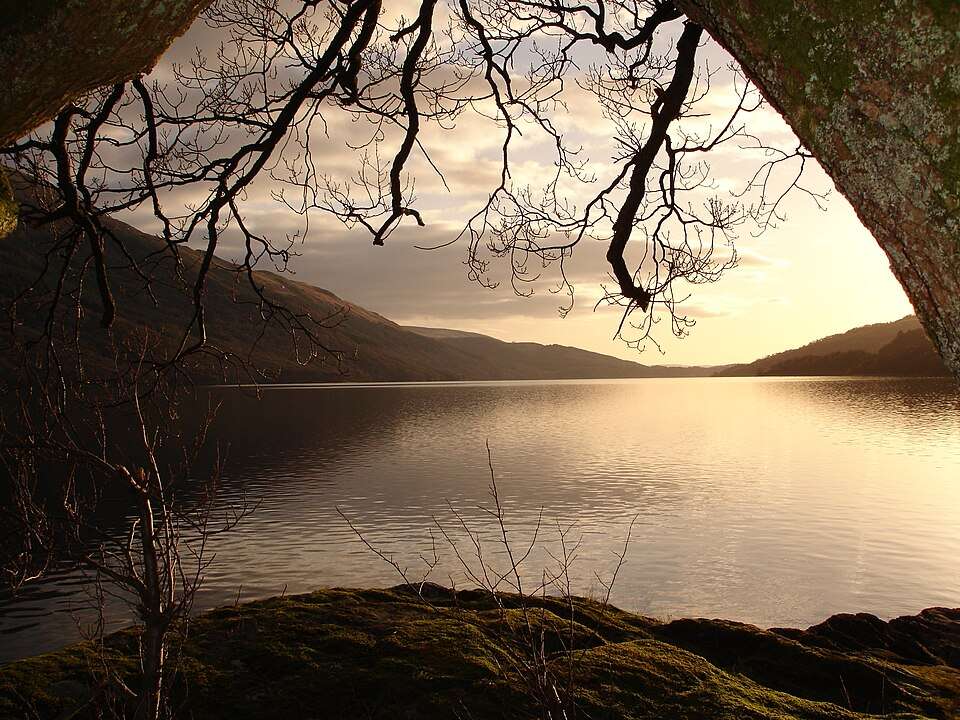
Thirty-five minutes north, Loch Lomond & The Trossachs National Park opens with Britain’s largest inland water and runs to twenty-one Munros. The classic first visit: Luss, the conservation village of rose-fronted cottages on the western shore — genuinely lovely, correspondingly busy — with a loch cruise from Luss or Balloch for the islands-and-bens hour. Balloch adds the Maid of the Loch paddle steamer at her pier and Balloch Castle Country Park’s free shoreline.
The walker’s versions: Conic Hill from Balmaha, ninety minutes up for the archipelago view along the Highland Boundary Fault — the single best effort-to-reward climb near Glasgow — and Ben Lomond for the full Munro day, done properly equipped. Inland, the Trossachs proper — “the Highlands in miniature” — runs Loch Katrine’s historic steamship from Trossachs Pier through the landscape that Scott’s Lady of the Lake made famous, with bike hire for the shoreline road as the pairing.
Three rules apply: park car parks at the honeypots fill by mid-morning on good weekends (the train to Balloch dodges it), the seasonal byelaws mean camping in parts of the park needs permits from March through September, and the midges own still summer evenings — repellent is equipment, not caution.
Read the full Loch Lomond day-trip page.
Stirling — The Brooch of Scotland
Thirty minutes by train, Stirling is the compressed history day: whoever held this castle held Scotland, which is why the Wars of Independence were largely fought within sight of its rock. Stirling Castle is the best fortress visit in the country — the renaissance Royal Palace restored to Stuart-court color, the Great Hall, the tapestry studio’s Unicorn series, and Mary, Queen of Scots crowned here at nine months old. The mechanics: book online ahead for the best price, last entry runs an hour before closing, and the castle car park is restricted — the Park and Ride or the train-plus-walk up through the Old Town is the honest route, and online booking even discounts car-free arrivals.
The stack: the Church of the Holy Rude (where James VI was crowned, roof original), the Old Town Jail and the walk down the Back Walk walls, and across the valley the National Wallace Monument — the Victorian tower on Abbey Craig holding Wallace’s sword, with the 246-step climb reading the Forth’s loops and the Ochils. Bannockburn’s visitor experience, ten minutes south, completes the independence-wars triangle for the committed. A full day that never feels padded, and the most history for the travel time of any trip from Glasgow.
Edinburgh — The Fifty-Minute Calibration
The train runs every fifteen minutes and takes about fifty, which makes Edinburgh less a day trip than a commute — the calibration is about expectations, not logistics. One day covers one register: pick it.
The classic register: the Castle (book the first entry online and do it at opening — the queue math is unforgiving by 11), down the Royal Mile with detours into the closes rather than the tartan shops, Holyrood Palace or the Parliament by taste, and St Giles’ crown spire between. The view register: Arthur’s Seat’s summit or the shorter Calton Hill for the monuments-and-skyline hour, then the New Town’s Georgian grid and Dean Village’s improbable riverside quaintness. The museum register: the National Museum of Scotland’s free everything-house and the Scottish National Gallery.
August is Festival month — the city triples in density and price, taken deliberately or avoided entirely — and the Mile’s ghost-tour and shortbread economy is theater priced as such. Glasgow-based travelers doing both cities gain the better deal: Edinburgh’s sights with Glasgow’s restaurant prices and hotel rates.
Culzean & the Ayrshire Coast — Castle, Cliffs & Burns
An hour southwest, the Ayrshire day pairs Scotland’s most theatrical clifftop castle with its national poet. Culzean Castle — Robert Adam’s masterpiece perched on Ayrshire cliffs, with the oval staircase as the interior showpiece and an Eisenhower apartment gifted for his war service — sits in a country park of shore paths, a walled garden, and the Swan Pond family circuit; the castle-and-park combination absorbs most of a day on its own.
The Burns layer: Alloway, just south of Ayr, holds the Robert Burns Birthplace Museum — the thatched cottage where he was born, the Brig o’ Doon and the Auld Kirk from Tam o’ Shanter standing exactly as the poem staged them, and a museum that treats the poet as literature rather than shortbread-tin decoration. January’s Burns Night season is the full immersion, booked ahead.
The coast completes it: the Electric Brae’s optical-illusion hill (cars appear to roll uphill; generations have stopped to test it), Dunure’s harbor ruin, and fish and chips on the Ayr front. This is the gentle, grown-up day — gardens, poetry, and sea air — and the right counterweight to a Munro or a museum crawl.
Arran — Scotland in Miniature
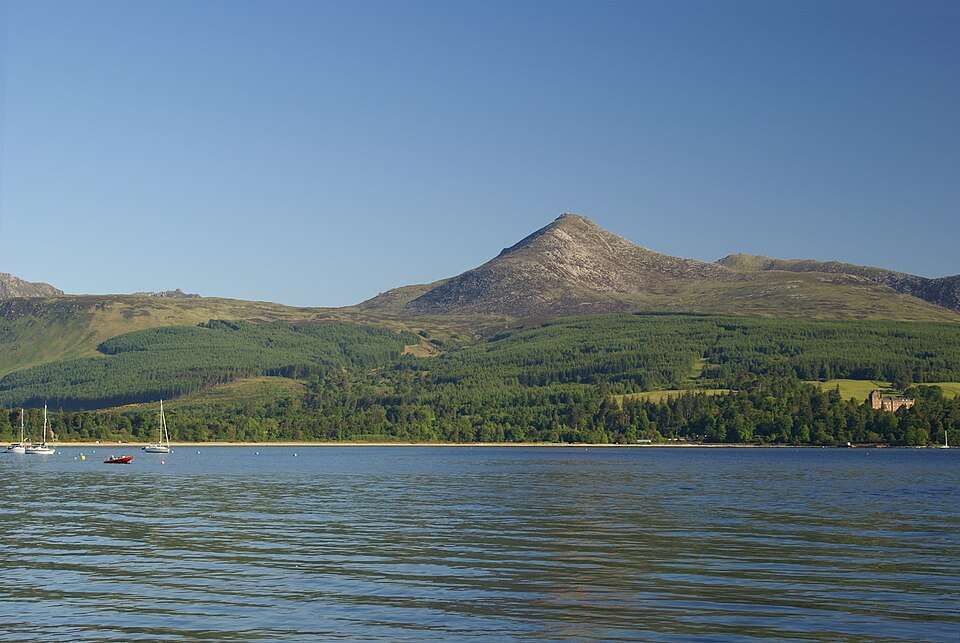
The full-island day runs: forty-five minutes by train to Ardrossan, the CalMac ferry (under an hour) to Brodick, and an island that fits its “Scotland in miniature” tag — Highland mountains in the north, Lowland farmland in the south, standing stones, a castle, and a distillery, all on a fifty-five-mile coastal ring.
The formats: the compact version stays around Brodick — Brodick Castle’s gardens, the shore walk, and Arran Cheese and Arran Aromatics at the ferry end — while the committed version takes the island bus or a hired bike to Machrie Moor’s bronze-age stone circles, moody and usually near-empty, or climbs Goatfell, the island’s 874-meter summit, straight from the ferry for the biggest earned view in this lineup. Lochranza’s distillery and castle ruin anchor the north for drivers.
Three rules apply: book the ferry ahead in summer (foot passengers travel easiest; cars need reservations and luck), check the last sailing time twice, and build slack — CalMac weather cancellations are a genuine planning factor, which is the honest price of an island. Done right, it’s the best single-day island experience in southern Scotland.
Read the full the Isle of Arran day-trip page.
Kelvingrove, the Patter & Glasgow Itself
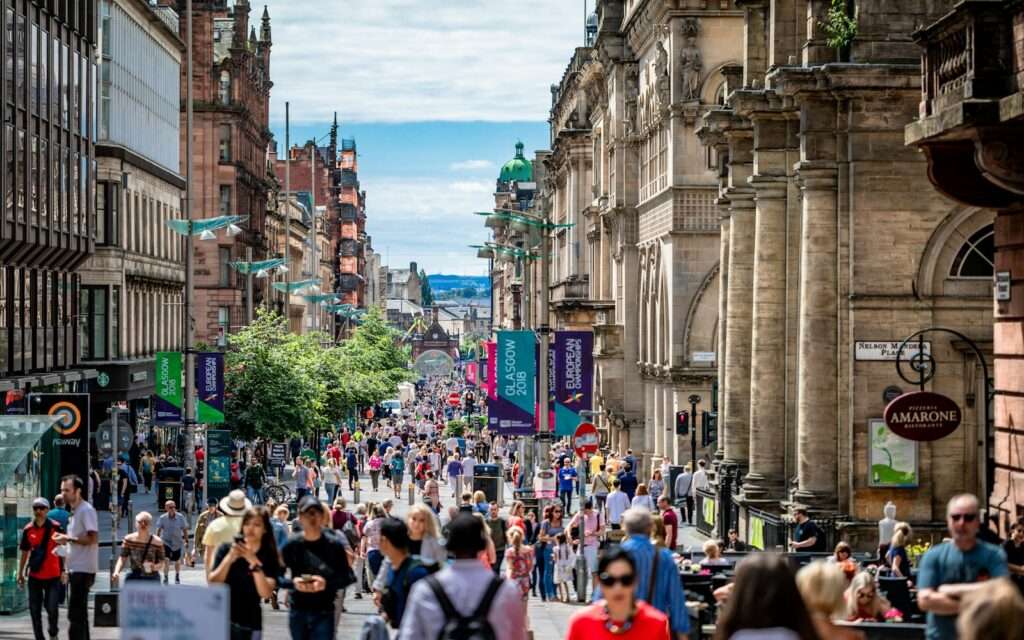
The city first, sorted: Kelvingrove Art Gallery and Museum is free, world-class, and beloved in a way few museums manage — Dalí’s Christ of St John of the Cross upstairs, the floating heads, the daily organ recital at 1 (Sundays at 3) as the ritual. The Burrell Collection in Pollok Park, rebuilt and re-hung, is the connoisseur’s other free half day, with Highland cattle in the park as the bonus Scotland.
The Mackintosh question: the Glasgow School of Art remains fire-damaged and closed, so the living Mackintosh is elsewhere — House for an Art Lover, the Mackintosh House reassembled at the Hunterian, and tea at the Willow Tea Rooms on Sauchiehall Street, restored to the 1903 designs. The Necropolis behind the medieval cathedral gives the city’s best free view and its best Victorian theater of death; the cathedral itself is the mainland’s finest pre-Reformation survivor.
The rest: the West End’s Ashton Lane and Byres Road for the evening, the Barras weekend market for the unvarnished city, and the Subcrawl — a pint at a pub near each of the fifteen subway stops — as the local endurance sport, attempted in part and with judgment. Eat the curry (Glasgow argues it invented tikka masala and argues it well), respect the chippy, and learn that the patter — the rapid, affectionate abuse that passes for conversation — is hospitality in local form. Season math: May, June, and September are the weather windows such as Scotland offers them, August drains the city toward Edinburgh’s festivals (a fine time to be here), and the rain is structural year-round — the museums are free for a reason.
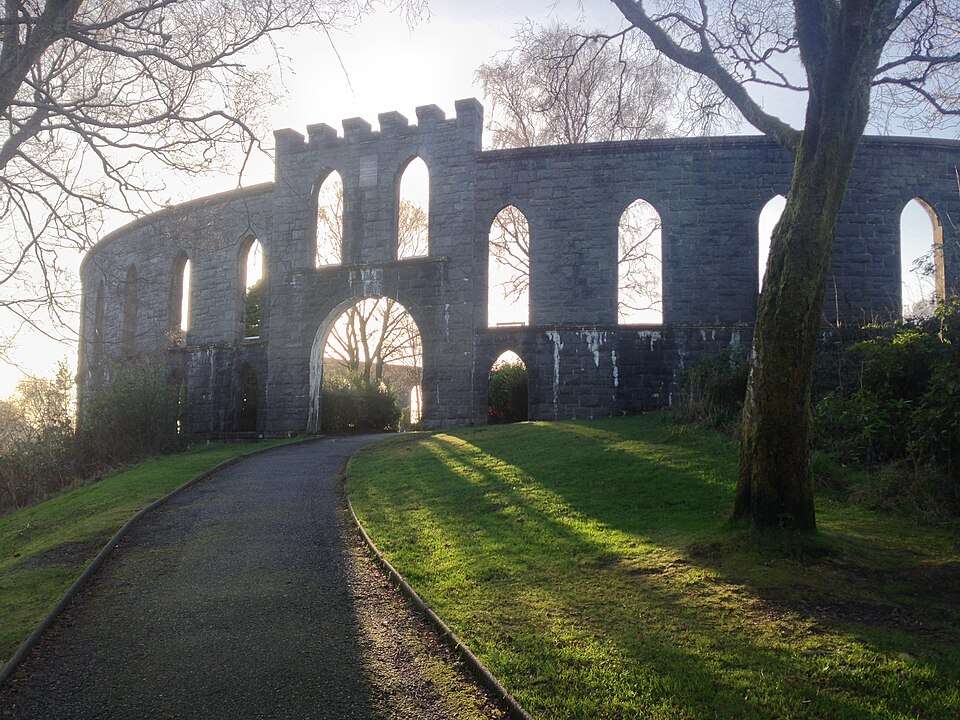
Full day-trip pages: Oban.
Frequently Asked Questions
What’s the best day trip from Glasgow?
Stirling — thirty minutes to the castle that decided Scotland, the Wallace Monument, and the Old Town walls. Book castle tickets online ahead and skip the restricted car park; the train-and-walk is the honest route.
How do you do Loch Lomond without a car?
Train to Balloch (about 50 minutes) for the cruises, shoreline, and Maid of the Loch, or bus to Luss and Balmaha for Conic Hill. Weekend car parks fill by mid-morning anyway — the rails win.
Is Edinburgh worth doing as a day trip from Glasgow?
Absolutely — trains run every fifteen minutes and take fifty. Pick one register per day (castle-and-Mile, views, or museums), book the castle’s first entry online, and know August is festival-priced chaos taken deliberately.
Is Arran doable in a day?
Yes — train to Ardrossan, ferry under an hour, then Brodick’s castle and shore, Goatfell for climbers, or Machrie Moor’s stone circles by bus or bike. Book summer ferries ahead and confirm the last sailing twice.
Where should you start in Glasgow itself?
Kelvingrove — free, world-class, and the daily 1 p.m. organ recital is the city’s gentlest institution. Add the Necropolis view, the Burrell in Pollok Park, and the Mackintosh trail via the Hunterian and Willow Tea Rooms.